 Yoka News

Shipping AI: How Artificial Intelligence Is Transforming Logistics in 2026
The global shipping and logistics industry has always been about moving things from one place to another as efficiently as possible. For decades, that efficiency was driven by human expertise, established routes, and hard-won operational experience. In 2026, a new force is reshaping that equation entirely: artificial intelligence.
Shipping AI is no longer a buzzword or a future projection. It is here, it is operational, and it is quietly rewriting the rules of how goods move around the world, from the warehouse floor to the open ocean.
Whether you are a freight manager, an e-commerce business owner, a logistics professional, or simply someone trying to understand why your delivery tracking has suddenly become eerily accurate, this guide covers everything you need to know about AI in shipping and what it means for the industry right now.
What Is Shipping AI?
Shipping AI refers to the application of artificial intelligence technologies , including machine learning, predictive analytics, computer vision, and autonomous systems-to the planning, execution, and optimisation of shipping and logistics operations.
In practical terms, it means systems that can predict shipping delays before they happen, automatically reroute vessels around bad weather, forecast demand weeks in advance, detect equipment faults before they cause breakdowns, and process shipment data in seconds that would take a human team hours to handle.
AI in logistics is no longer a futuristic experiment, it has become the intelligent backbone of modern supply chains, with applications ranging from predictive demand forecasting to real-time route optimisation fundamentally reshaping how logistics networks plan, execute, and adapt.
Why 2026 Is a Turning Point for Shipping AI
The conversation around AI in logistics has been building for several years, but 2026 marks a meaningful shift. While AI became firmly embedded in industrial practice by 2025, 2026 is set to be the year it is systematically integrated into the everyday operations of logistics and transport.
Several factors are driving this acceleration:
Explosion of real-time data. Modern shipping operations generate enormous volumes of data from GPS systems, IoT sensors, port networks, weather feeds, and cargo trackers. AI systems are uniquely capable of turning that data into actionable decisions in real time, something no human team can do at scale.
Rising customer expectations. Consumers and businesses alike now expect faster, more reliable deliveries with real-time visibility at every step. Logistics companies are under pressure to reduce fuel costs, improve delivery timelines, and enhance customer satisfaction-and AI-powered automation helps achieve these goals with measurable impact.
Competitive pressure. Many shippers already expect logistics providers to offer AI-enabled services, meaning companies that delay adoption risk falling behind not just in efficiency, but in client retention.
Proven ROI. Early adopters are reporting concrete returns. AI-driven route optimisation reduces logistics costs by approximately 15% while improving inventory management by up to 35%, according to McKinsey data.
6 Ways Shipping AI Is Changing the Industry Right Now
1. Smarter Route Optimisation
One of the most immediate and impactful applications of shipping AI is route planning. Traditional routing relied on fixed schedules and historical traffic data. AI changes this entirely.
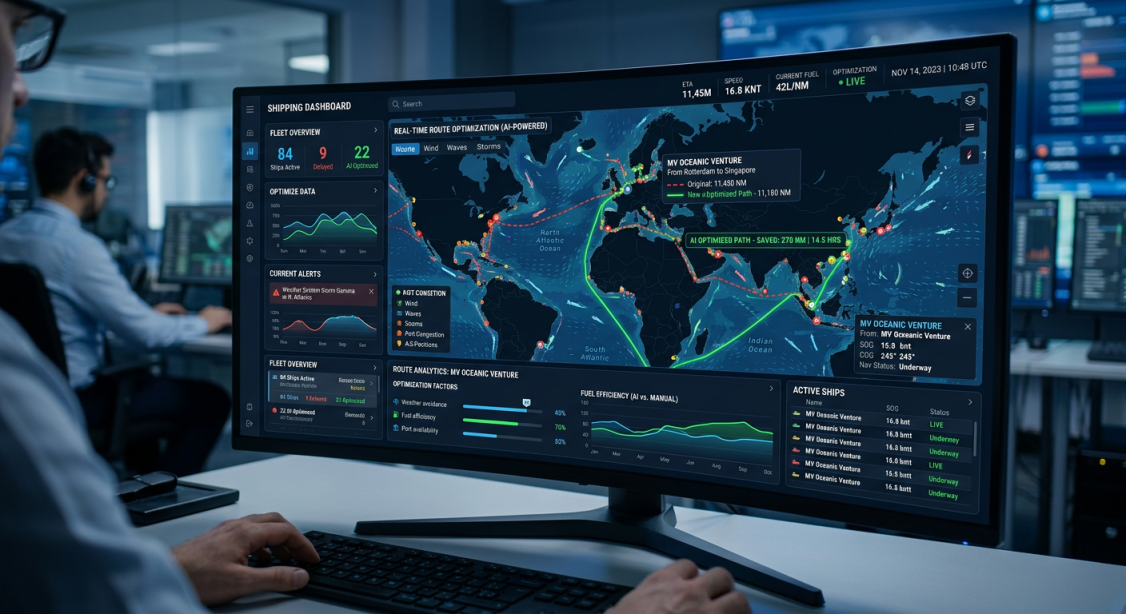
AI-powered Transportation Management Systems analyse traffic, weather, fuel prices, driver availability, and delivery priorities in real time. Instead of reacting to delays, AI predicts them — and modern smart logistics platforms automatically re-route shipments to avoid congestion, reducing both fuel waste and delivery time.
In maritime shipping, the results are equally impressive. French shipping giant CMA CGM uses AI to assess historical data and real-time conditions to determine the most fuel-efficient vessel paths. This approach has led to reduced fuel consumption, lower costs, fewer greenhouse gas emissions, improved punctuality, and greater customer satisfaction.
2. Predictive Maintenance
Equipment failure is one of the most costly and disruptive events in shipping operations. A vessel that breaks down mid-voyage, a warehouse conveyor that stops unexpectedly, or a delivery truck that fails on a busy route -each creates ripple effects across an entire supply chain.
AI in shipping management analyses engine data, vibration patterns, and performance logs to predict breakdowns before they occur, directly improving on-time performance and SLA adherence.
This shift from reactive repairs to predictive maintenance is one of the clearest financial wins of shipping AI adoption. Companies are no longer waiting for things to break. They are fixing them before they do.
3. Demand Forecasting and Inventory Optimisation
Overstocking ties up capital. Understocking loses sales and damages customer relationships. Getting inventory levels right has always been one of the hardest balancing acts in logistics, and AI is proving remarkably good at it.
AI is proving transformative by enabling real-time, multifactor forecasting that goes beyond historical data. It helps manage SKU proliferation, predict demand shifts, and optimise inventory across channels.
Traditional forecasting looked backward. AI-powered demand forecasting looks outward - incorporating weather patterns, social media signals, promotional activity, market conditions, and real-time sales data to give logistics teams a far more accurate picture of what they will need and when.
4. AI in Warehousing and Last-Mile Delivery
Warehouses are among the highest-cost and most labour-intensive parts of the shipping chain. AI is changing how they operate from the inside out.
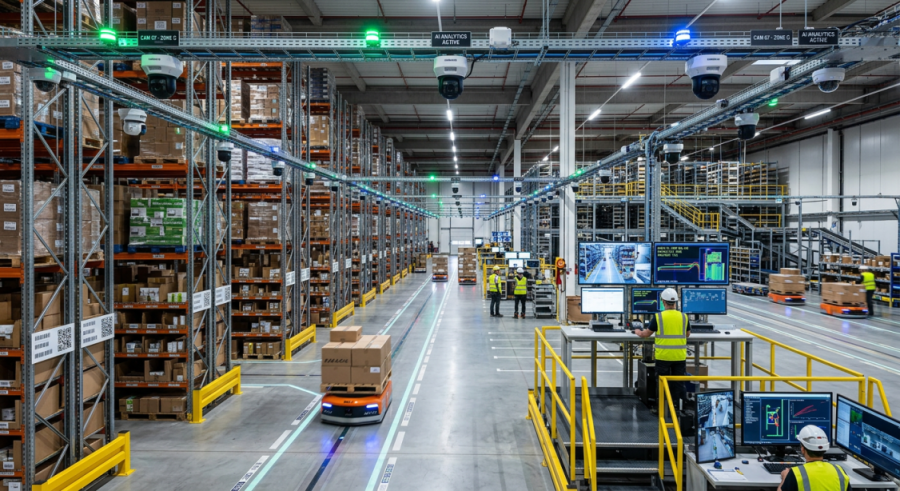
Agentic AI will automate routine communication to improve efficiency, and AI-driven computer vision will help warehouses process goods faster, reduce errors, and optimise space utilisation, raising service levels.
On the last-mile side-the final leg of delivery that is notoriously expensive and complex - AI systems optimise routes based on real-time factors including traffic, weather, delivery windows, and package characteristics. The result is faster deliveries, fewer failed attempts, and lower cost per drop.
5. AI Freight Pricing and Cost Transparency
Freight pricing has historically been one of the most opaque systems in logistics. LTL (less-than-truckload) pricing is notoriously complex - base rates, fuel surcharges, liftgate fees, and residential delivery charges vary by carrier, and two quotes for the same shipment can differ by 40% simply because fee structures are buried in the fine print.
AI is bringing transparency and intelligence to this space. Platforms now use machine learning to compare carrier rates in real time, flag hidden fees before a shipment is booked, and help businesses make faster, more informed freight decisions. For small and medium-sized businesses especially, this levels a playing field that was previously tilted heavily toward large shippers with dedicated logistics teams.
6. Autonomous Vessels and Smart Ships
Perhaps the most dramatic long-term transformation is happening on the water. AI-controlled smart ships - vessels that use artificial intelligence to assist with navigation, engine performance, safety monitoring, and route optimisation - are moving from pilot programmes to operational reality.
Sea freight in 2026 is entering a decisive transformation phase. Smart ships equipped with AI-powered navigation, predictive maintenance systems, and real-time data analytics are no longer experimental concepts - they are becoming operational realities.
Full autonomy on long-haul ocean routes is still some years away, but the direction of travel is clear. AI is steadily reducing the gap between human-operated vessels and intelligent, self-optimising ones.
The Real Numbers: What Shipping AI Delivers
The business case for AI in shipping is not theoretical. Here is what the data shows:
- 10% average reduction in fuel consumption through AI route optimisation
- Up to 20% reduction in greenhouse gas emissions in maritime operations
- 15% reduction in logistics costs through AI-driven routing
- Up to 35% improvement in inventory management accuracy
- The share of businesses using AI in logistics jumped from 6% in 2023 to 30% in 2025 - and 93% of organisations are now either exploring or actively deploying AI
- 47% of North American shippers already use AI for freight forecasting or data entry automation, with adoption climbing across more operational areas
These are not marginal gains. In an industry where profit margins are tight and competition is fierce, a 10–15% cost reduction is the difference between winning and losing business.
Challenges Holding Shipping AI Back
For all its promise, AI adoption in shipping is not without friction. Understanding the barriers is just as important as understanding the benefits.
Data quality and sharing. AI systems are only as good as the data they are trained on. The shipping industry generates vast amounts of data, but it is often siloed, inconsistent, or simply not shared between competitors who might all benefit from richer collective datasets.
High upfront investment. Implementing AI systems - especially at the infrastructure level,requires significant capital. High initial investment and limited AI-skilled professionals can slow adoption, especially for small and mid-sized companies.
Regulatory complexity. As AI becomes more embedded in operations, compliance requirements are tightening. With the enforcement of the EU AI Act, alongside regulations such as NIS2 and the Cyber Resilience Act, companies must demonstrate that their AI systems operate safely, transparently, and in full regulatory compliance.
Overhyped expectations. Not every AI project delivers. Recent reports suggest that 95% of generative AI pilots at companies are failing- a sobering reminder that technology alone does not solve operational problems. Strategy, execution, and change management matter just as much as the AI itself.
What the Future of Shipping AI Looks Like
The trajectory is clear, even if the timeline is debated. In 2026, vendors are shifting from bolt-on AI tools to AI-native workflows - built directly into the platforms logistics teams already use, so users experience AI-assisted decisions surfaced within their existing tools rather than having to ask AI separate questions.
The next major frontier is agentic AI, autonomous systems that do not just recommend decisions but execute them. Autonomous, specialised AI agents are increasingly taking on specific supply chain tasks, detecting deviations in real time - such as transport delays or disruptions in material flows, and automatically initiating countermeasures. Multiple agents operating in parallel form a kind of swarm intelligence that links planning, warehousing, scheduling, and shipping more closely and more rapidly than before.
For businesses that depend on shipping - whether they are exporting goods, managing a fleet, running a warehouse, or building a supply chain, the message from 2026 is clear: AI is no longer optional infrastructure. It is competitive infrastructure.
How to Get Started With Shipping AI
If you are a logistics business or a company that ships goods regularly, here is a practical starting point:
Start with one problem. Do not try to AI-transform your entire operation at once. Pick one specific pain point - freight cost visibility, demand forecasting, delivery route efficiency, and find an AI tool purpose-built for it.
Prioritise data readiness. AI needs data to work. Before investing in tools, audit what data you have, where it lives, and how clean it is. Better data inputs produce better AI outputs.
Choose platforms over point solutions. Where possible, opt for AI capabilities embedded in platforms you already use - TMS, WMS, or ERP systems - rather than standalone tools that create new integration headaches.
Measure from day one. Set baseline metrics before you implement, and track improvements rigorously. The ROI of shipping AI is real, but it needs to be documented to justify further investment.
Invest in people alongside technology. AI adoption in supply chains is not just about integrating the latest technology - it also involves a critical focus on upskilling the workforce and implementing effective change management. Your team needs to understand and trust the AI tools they are working alongside.
Final Word: Shipping AI Is Not the Future. It Is Now.
The shipping industry has survived pandemics, geopolitical disruption, fuel crises, and demand shocks. It has always found a way to adapt. In 2026, the next adaptation is underway, and artificial intelligence is at the centre of it.
For businesses that move goods, the opportunity is significant. For those who wait, the risk is real. The companies building AI into their logistics operations today are not just cutting costs. They are building the resilience, speed, and visibility that will define the next generation of global trade.
Shipping AI is not coming. It has arrived.
For more insights on technology, business, and the stories shaping Africa and the world, stay connected with us.
AI is changing more than just logistics: Read how it's changing who needs to code
Comments 0
Leave a comment — or for a richer experience.
Guest comments are reviewed before publishing.
No comments yet. Be the first to share your thoughts!